
Insytful's 2026 trend predictions for accessibility, search and governance

TL;DR [too long; didn't read] 🤯
- Brands will put a hard stop on PDFs in 2026
- With a reduction in site traffic, micro-conversions on websites will mean more
- Conversational site search will replace keyword search
- First-party analytics will create personalised experiences that are accurate and relevant
- Digital teams must embrace structured web content to get found by AI assistants
The digital landscape is changing at a rapid pace, with constant evolution happening in the tools we use daily. The impact is everywhere. For agile digital teams, keeping up won't be a struggle. But for those resistant to change, relying on conventional ways of doing things will be outdated in 2026.
Throughout the year, our team spends time analysing how users move through complex digital journeys. Based on our experience working with customers, here's what we expect will have the most significant impact on websites next year.
The biggest changes we anticipate will be in digital accessibility, search and governance. We've grouped our predictions into five areas, so get ready to read the forecasted trends for websites in 2026:
1. Digital accessibility: Moving away from PDFs for good
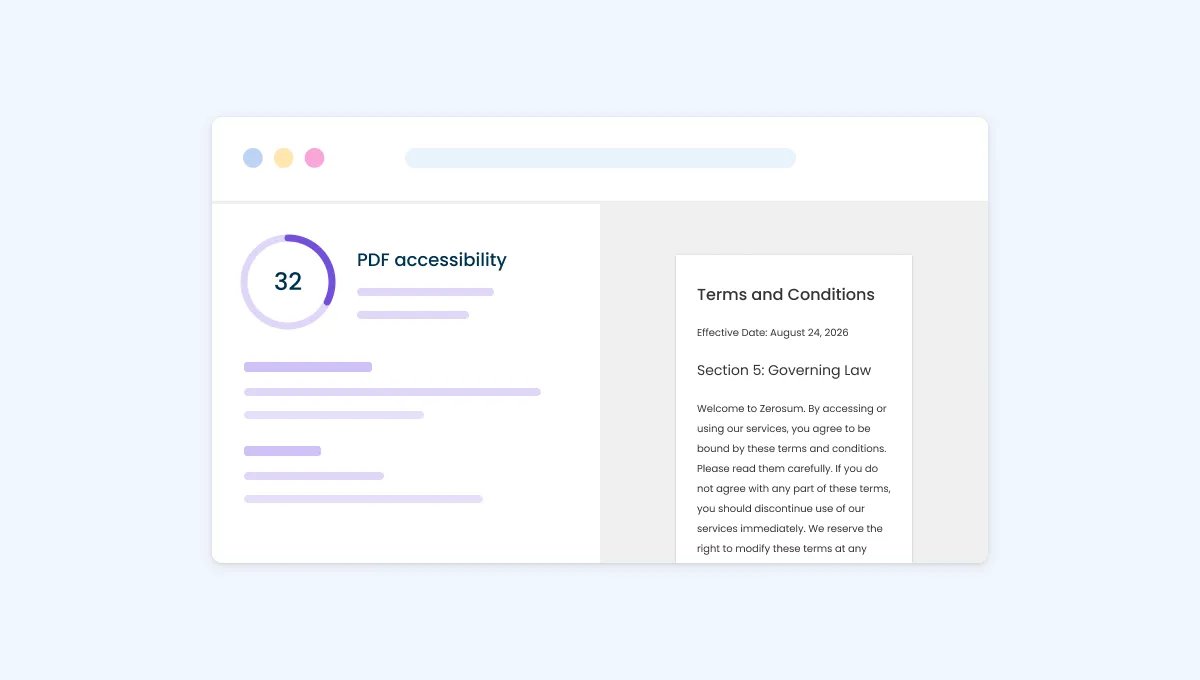
In 2026, large enterprises and public sector organisations will tighten their guidelines to avoid using PDFs because, in reality, an HTML page would do. This initiative aims to enhance both digital accessibility and usability.
Web managers and digital teams should anticipate a hard stop on creating PDFs unless it is truly necessary. As mentioned previously, HTML is generally superior in terms of accessibility, responsiveness, and SEO. In specific contexts, a PDF still has its place, such as for legal authentication and security purposes.
This view is supported by international and UK guidance that prefers web-native formats, with PDFs only permitted in limited cases.
What does this mean in practice for PDFs and accessibility?
Accessibility is the bare minimum
The introduction of the EAA in 2025 means accessibility stops being “nice to have” and becomes a baseline requirement for public and private sector organisations.
PDF audits require data
By using analytics, users can identify high-traffic PDFs through audits to decide which ones need conversion to HTML first. Additionally, low or no-traffic PDFs can often be removed entirely.
New year, new rules
Digital teams should expect more rules to emerge, like “Prioritise HTML first. PDFs only with clear accessibility justification.”
AI wants HTML not PDFs
Optimising for AI will push accessible HTML forward and help eliminate inaccessible PDFs for good.
With tools like Insytful, teams can see which of their sites are PDF-heavy and need attention. Additionally, with the analytics integration, it's easy to identify popular content that needs to be converted to HTML.
2. Search: Micro-conversions mean more
Generic search traffic has already begun to decline, with an increasing number of journeys originating within AI layers. In 2024, success might have been measured by a 10% increase in organic sessions. However, by 2026, success will be measured by microconversions, such as a 20% increase in completed self-service journeys on the website.
As a result, every visit to your website and digital estate will become even more valuable.
What does this mean in practice for search metrics?
Switch focus from sessions to micro-engagements
We'll see less obsession with sessions and more focus on depth of engagement and micro-conversions, for example, content saves and self-service completions.
Focus on meaningful interactions
Think of a micro-conversion as a small but meaningful sign that a visit was useful. Whether it's downloading a template, starting a form or saving content for later.
Attribution gets messy
Attribution becomes messier, with AI as a “black box” referrer, so first-party data and on-site behaviour play a bigger role in measuring content impact.
A single source of truth for retention
Marketing, product, and CX teams increasingly share a single view of the funnel and retention, rather than operating separate dashboards.
With first-party analytics and Google Analytics integrated into Insytful, tracking your content performance within the app just got easier. The extra visibility makes data-led decisions simpler for teams, helping to prioritise which content needs fixing first.
3. AI search: The evolution of conversational on-site search
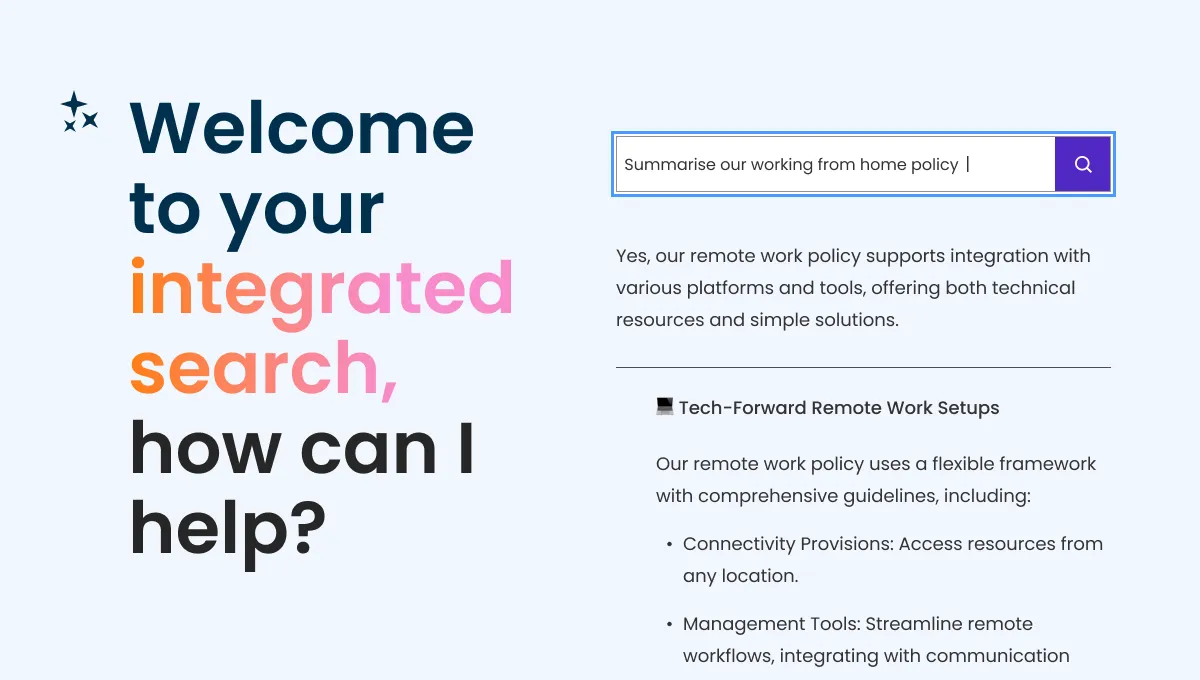
The introduction of AI saw ChatGPT replace traditional search engine queries with conversations. Now, we're seeing demand for AI search to be integrated into websites, to continue the conversation. In 2026, traditional website search will evolve from a search box with keywords to conversations on the site.
A typical scenario would look like this:
Instead of landing on a website and searching for support or navigating through help documents, users can ask a question directly. For example, users might ask "How do I integrate Insytful with our CMS?" and get a simplified answer with relevant links quickly.
What does this mean in practice for the evolution of web search?
Keywords are replaced with conversations
Keywords will be replaced for queries that reduce navigation around the site. You'll see fewer "November update" searches and more "What new features were released to Insytful in November" searches.
Structure matters
Content needs to be written and structured so that assistants can effectively orchestrate journeys for next steps, conditions, and variants.
Success metrics will change
Success will be measured by the number of completed conversations.
AI governance and guardrails are a must
Digital teams will need to work closely on conversation design and establish guardrails, such as handling sensitive topics, knowing when a human is required, and how to avoid outdated answers.
Content gaps will become more apparent
Conversations will highlight content gaps and missed conversion opportunities. If AI search cannot provide an answer, it will be because the content is missing from your site in the way a user is asking for it. Take the opportunity to fill content gaps, using AI insights.
Insytful’s conversational AI search can surface these journeys and show where users are getting stuck so that you can refine prompts, content, and guardrails over time. Additionally, the tool offers peace of mind due to the strict guardrails established to protect users and organisations from false or harmful information.
4. Privacy-first, consent-led personalisation and first-party analytics
Less and less people are clicking 'accept cookies' when they land on your website. And the number reduces again when you consider the traffic that is coming from AI assistants. To keep data-led marketing alive, users need to change tact for personalised experiences and analytics attribution.
Even with Google’s softer stance on eliminating third-party cookies, the direction of travel for analytics is clear. 2026 is the year for privacy-first, consent-based tracking and targeting. Brands are shifting to first- and zero-party data, also known as what users share directly, creating a more transparent personalisation experience.
Recent analyses of cookieless marketing trends have suggested that brands that embrace first-party data are experiencing "unmatched accuracy, relevancy and compliance".
What does this mean in practice for analytics and personalisation?
Website experiences will build trust
On-site experiences become the primary place to earn trust and gather data: at logins, preferences, surveys and in-product behaviour.
Preference centres continue to define communication
Preference centres become the place where users can actively shape the content and alerts they want to receive.
Demand will soar for connected tools
Expect demand for tools that can connect content consumption to consented profiles and journey analytics to create personalised experiences.
Insytful's sister brand, Contensis, has already laid the foundations for creating personalised experiences using privacy-first tracking. In addition to the first-party analytics provided by Insytful, digital teams can be confident in use data to develop impactful marketing decisions.
5. Structured, 'AI-ready' content and composable CMS
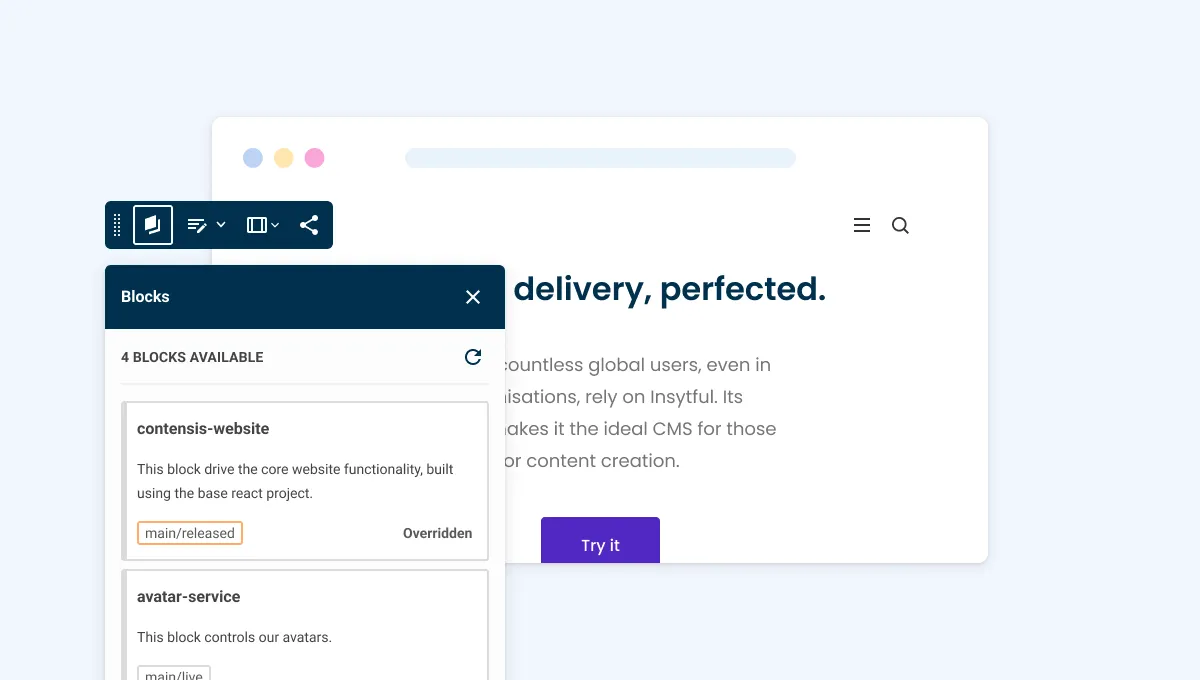
If AI assistants are the new discovery layer, then content must be well-structured, reusable, and channel-agnostic. Headless and composable CMS adoption is accelerating because they speak the same language as AI. Their structure makes it easier to push content into websites, apps, product UIs, partner portals, and AI agents from a single source of truth.
For example, instead of one long Support page, it is recommended to have different content types for different audiences, such as:
- A how to guide
- A glossary of terms
- Or a troubleshooting workflow.
Each content type makes it easier for AI assistants to find and serve the right content at the right time. If there is one trend to pay attention to in 2026, it is embracing structured content to get found by AI assistants. Miss this, and your content could get missed by the world.
What does this mean in practice for CMS's in 2026?
Smaller content chunks are in
Long web pages are out. Break content into smaller components and create content that matches a question, including answers, steps, definitions, and examples.
Time to invest in content models
Invest in content models and taxonomies so that search engines and assistants can accurately understand the relationships between content.
HTML is in, PDFs are out
It's another reason to switch from PDFs to structured HTML content. You cannot break your content up into smaller components for AI to read in a static document.
Even if you're not ready to move to a headless or composable CMS yet, the good news is you can start standardising your content types today. By applying consistent metadata, you will also find that this pays off in 2026 and beyond for improved search visibility. Need a way to check your site metadata? Insytful can help!
How is Insytful preparing for 2026?
At our annual community event, Velocity, we provided a sneak peek at our roadmap for 2026. Insytful can already help with digital accessibility and governance, but we're taking steps to make our offerings have even greater impact. We're talking:
- A combined accessibility score for web pages and PDFs: putting more pressure on digital teams to remove inaccessible PDFs from their site.
- AI site search with insights: See what conversations were had and identify content gaps to improve your customer experience.
- Reports and policies: Gain greater control over your content by creating custom reports across your website.
- Measuring environmental impact: View the carbon rating of your web pages, PDFs and documents, and gain practical insights to help you make improvements.
2026 insights, wrapped
The key insights taken from this trends blog is that websites will get easier to use for visitors, content will get easier to find and it will be easier to govern, too.
Here's a final summary of what to focus on over the next year:
- Forcefully replacing PDFs with HTML for accessibility and search benefits. Structured HTML is what AI and search engines understand best.
- Shifting success metrics for search, focus on micro-conversions and completed journeys on your site.
- Directing users to conversational AI search when they land on your site to find what they need, fast and without confusion.
- Building trust through first-party data and consent-led analytics and personalisation.
- Investing in structured, reusable content that is AI search ready.
If you're interested in anything we've mentioned in this blog, please get in touch. We'd love to help you improve the quality of your content in 2026.

Related blog posts

Insytful at Velocity 2025: Smarter insights, analytics and AI